Why Shipping?
With my recent change of role I have been asked by a few people now why shipping? When there are so many AI opportunities and paths to go down, with agents exploding and research compounding, why am I doing AI in shipping / maritime?
I didn't end up in shipping because it was trendy.
I ended up here because I got tired of software that only mattered inside a browser tab, or was made to distract people.
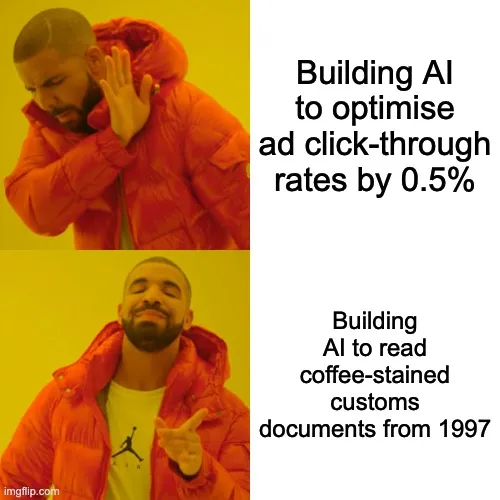
I'm interested in software that speeds up the physical world: cargo moving through ports, documents clearing borders, vessels arriving when they said they would, teams making better decisions under pressure. I'm not particularly interested in building the next optimisation layer for ads, engagement, or "add to cart".
Shipping is where software has consequences and physical outcomes.
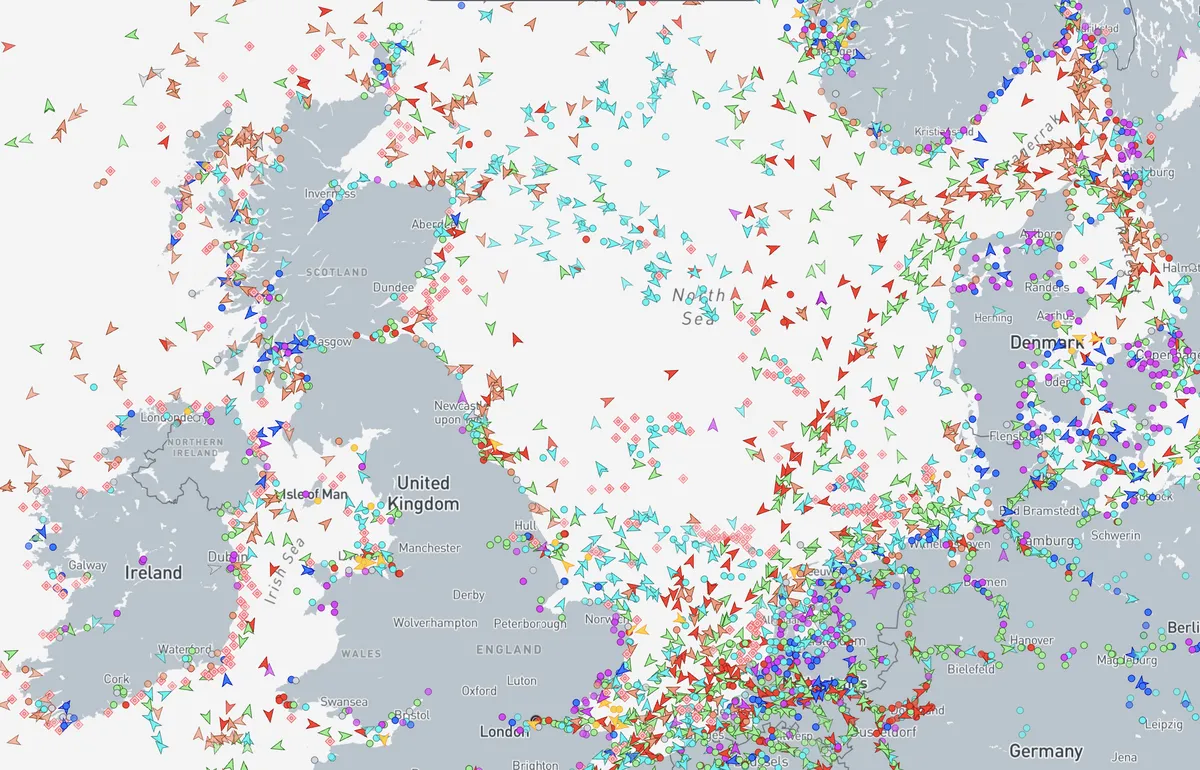
And that's why I'm here — and why I'm now building AI in the middle of the shipping communication layer as Head of AI, ML & Data at Sedna.
Shipping is the backbone (and it's bigger than most people realise)
maritime transport is the backbone of global trade, moving over 80% of goods traded worldwide by volume.
That one stat is the "why" for a lot of what I do, and shipping is growing as a sector in more and more ways from requirements for critical minerals for GPUs, data centers, cars, consumer goods grows, so does shipping.
Because once you accept that most things you buy, build, or depend on got on a ship at some point, you start seeing shipping as something closer to infrastructure than an industry.
Especially in the UK where we are an island that doesn't make much its self anymore.
Shipping is leverage. You improve the system slightly and the effects compound across trade lanes, ports, inventories, and ultimately prices.
That's the point: the world is connected through a small number of physical and operational choke points — and software, data, and workflow design can either reduce the friction around them or amplify it.
I didn't want my life's work to be "better ads"
My education background was originally business and marketing, I had already self taught programming and decided I needed to learn a different skill — and I've always been close to entrepreneurship and the typical "internet business" paths.
But over time I developed a very strong preference:
I want to build software that changes what happens outside the screen.
There's nothing wrong with e-commerce or ad-funded products. They're legitimate, and they can be brilliantly executed. They just don't motivate me.
Because a lot of "modern software" is ultimately software about attention: measuring it, steering it, monetising it, improving it by a fraction of a percent.
Shipping is different.
In shipping, when you ship something, something actually moves. When you fix a workflow, you can literally watch the result leave a gate, clear a border, or make a connection.
As highlighted by the all time classic Hackers where the target of a software attack is nothing less than some Oil Tankers.

A big part of my grounding in the sector came through The High Tide Foundation, where I spent over four years as a volunteer and in roles including marketing manager and project coordinator, helping young people in Tees Valley connect to maritime careers and experience.
Alongside that, I worked with maritime businesses directly (including freelance work with companies like Casper Shipping), and you quickly learn the reality:
Shipping is complex, multi-party, time-sensitive, and still heavily document-driven.
That combination is exactly where modern data + automation can create real value.
That is when I decided to found my first startup, SeerBI, which was an agency focused on data science in the maritime sector. Here we did a lot of good work with shipping companies, customs agents, charterers and even autonomous vessels around data analytics, workflow automation and bespoke ML models for classification and prediction.
Shipping is messy — which is why it's worth building for
If you want perfectly clean data, perfect standards, and perfect APIs… shipping will cure you of that fantasy.
A lot of operational truth still lives in email threads, attachments, PDFs, and forms that were designed for humans, not systems.
One of the earliest problems I worked on (and still one of the most "shipping" problems imaginable) involved documents so paper-based that they were literally getting coffee-stained and scanned — and people still had to manually read and re-key the data. We built computer vision workflows to reduce that manual pain.
That's shipping in a nutshell: the work is real, the stakes are high, and the information layer is often the bottleneck.
Which leads to a broader point that matters for "why shipping": the bottleneck in global trade is very often the data workflow, not physics.
Flytta
My startup Flytta was built to tackle a painfully concrete constraint: customs processing using AI.
The traditional customs declaration process can be slow, expensive, and error-prone — and it becomes a hard limiter on how fast goods can move, highlighted by the customs mess that followed Brexit, when the UK left the EU, bad for the country but ultimately great for someone looking to automate customs.
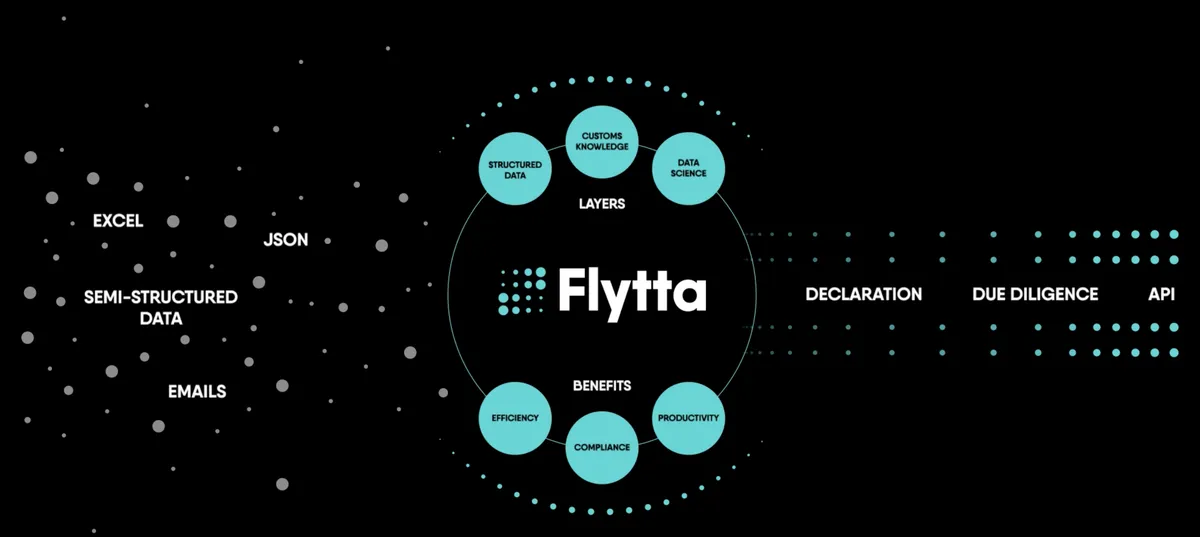
When we launched Flytta, the aim was simple: reduce customs processing time from typically ~90 minutes to near-instant, using automation built with customs expertise and data science.
That's the kind of thing I mean by "software that affects the real world"
Why we sold Flytta to Sedna
In March 2025, we sold Flytta to Sedna.
That decision wasn't about "moving on". It was about where Flytta could have the biggest effect.
Because the deeper you get into trade operations, the more you realise something:
Email is the operating system of shipping.
Not "email as a convenience". Email as the place where instructions arrive, exceptions are spotted, decisions get made, and commercial and operational truth lives, and not just customs but all shipping.
We saw this in Flytta where 90% of the data we processed came to us via email, to the point we were running out own SMTP service.
Sedna exists to transform shipping and supply chain workflows through its data-driven communication platforms. It layers email, workflows, VMS and AI to handle the scale and velocity of trade communications in a more structured, compliant way.
So if you want to make global trade faster, you don't just build another standalone tool. You embed capability into the place where work already happens. That's what made Sedna the right home for Flytta.
There was also practical proof of fit: Sedna had already been working with Flytta on automations like analysing LNG noon reports against written voyage instructions for anomalies — exactly the kind of "AI that reduces operational friction" work that's worth scaling.
My role now: Head of AI & Data
As part of the acquisition, I joined Sedna initially as AI Lead Architect where I was essentially a forward deployed engineer working side by side with our enterprise customers to deliver meaningful AI developments. My current role is Head of AI, ML & Data — leading Sedna's global Data & AI function to make international trade and shipping faster and better for all.
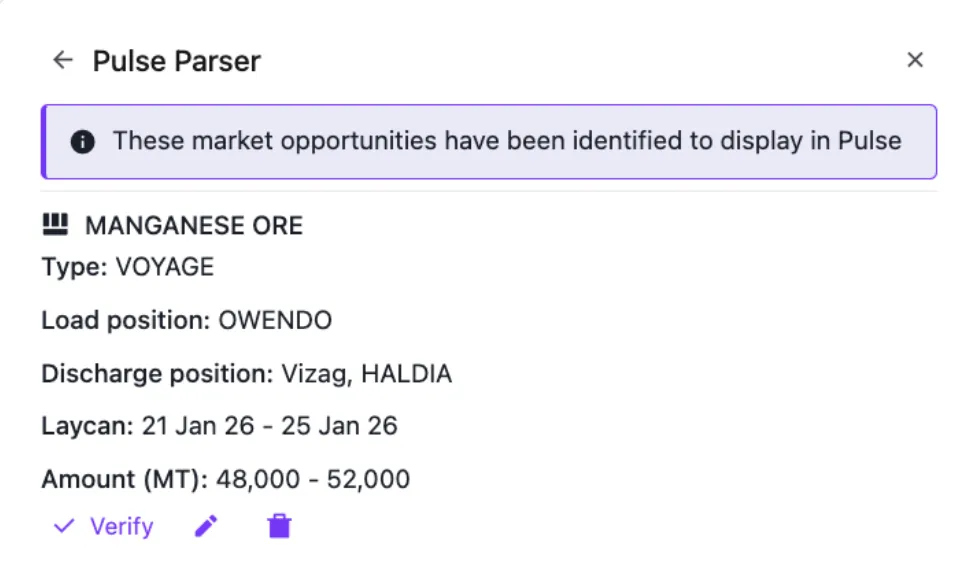
I'm responsible for the technical and strategic direction of AI, machine learning, and data across the platform, with a focus on building production-grade systems that scale and deliver real operational value to thousands of users, millions of emails, and billions of objects daily. Which is a huge responsibility but in the age of AI agents, multi-million token context windows and code that writes its self it is one I am excited to take.
In practice, that means:
- Leading a global team of AI software engineers across multiple time zones
- Owning Sedna's data architecture and platforms — SageMaker, Snowflake, pipelines, and governance
- Designing and deploying end-to-end ML systems, from data ingestion to inference in production
- Setting standards for MLOps, reliability, and model lifecycle management
- Translating product and business problems into practical AI solutions and agents not research demos
- Ensuring data quality, trust, and performance across mission-critical workflows with data catalogs
- Staying current with the latest AI research and practical implementations
- Managing internal AI tooling and engineering usage for maximum leverage
- Owning and managing AI budget and revenue
Why shipping, really?
If I had to boil it down:
- Shipping is real-world leverage. Over 80% of goods by volume move by sea, and small improvements ripple out across economies and that opportunity scale excites me.
- Shipping is constrained by workflows. The physical world moves fast; the information layer often doesn't, there is real work to be done here.
- Shipping is fragile. Chokepoints like Suez matter at global scale.
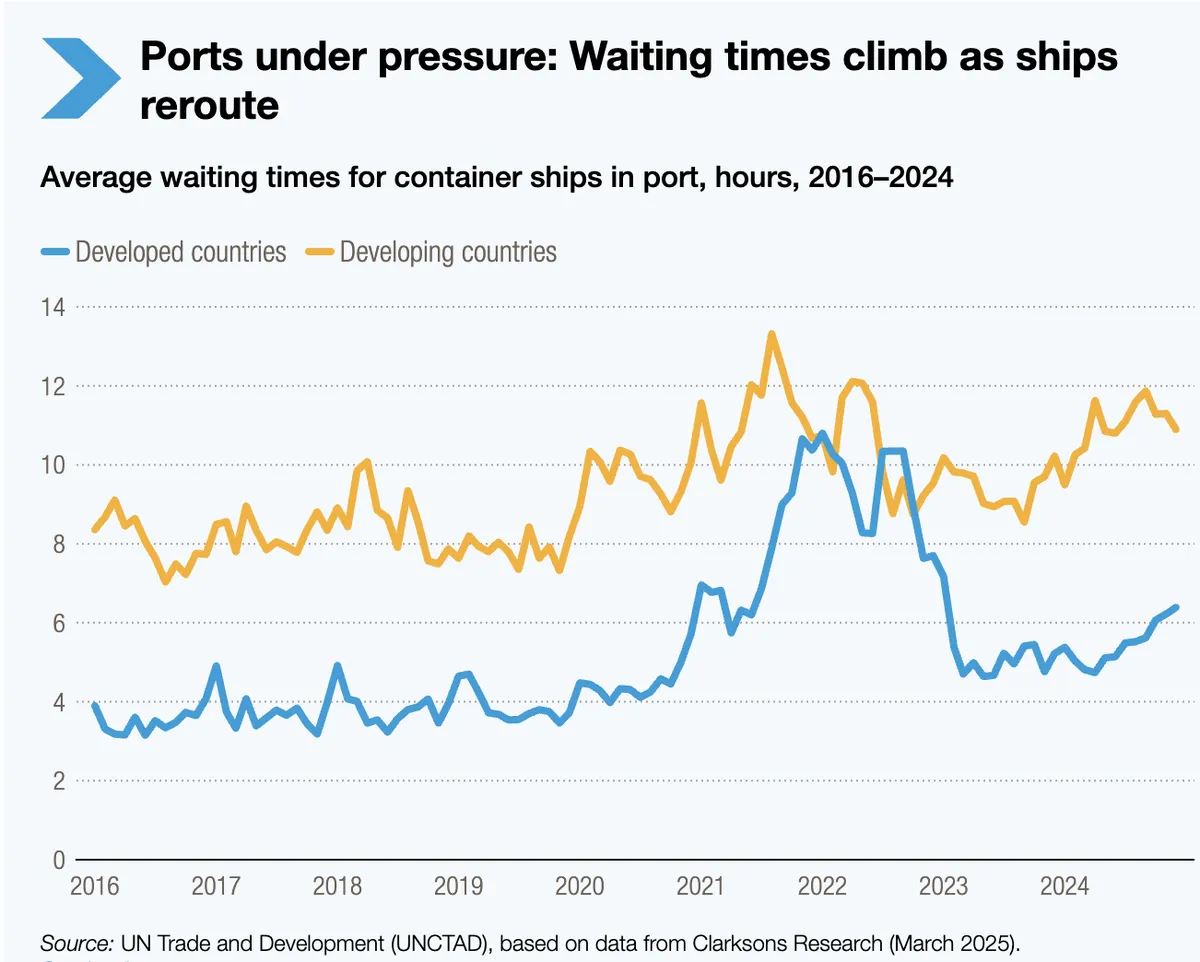
- Shipping is still under pressure. UNCTAD has described a fragile outlook, with trade growth expected to slow in 2026 amid uncertainty.
- I want my software to have weight. Less ads, more outcomes.
That's why I picked this sector. And it's why I'm excited to build here — because we're still early in what "good software" can do for global trade.
AI Has been used to refine the wording / markdown in the article but not in writing / ideation